
Casino Smart Contracts — Automated Payout Guide: The Programmable Future of Instant Wagering Returns 🎰
The convergence of decentralized ledger architecture and regulated iGaming has produced one of the most disruptive instruments in modern wagering: the casino smart contract. Unlike legacy payout rails that depend on manual reconciliation, correspondent banking windows, and jurisdictional clearing delays, these self-executing agreements encode wagering terms directly into immutable bytecode. Once predetermined conditions — a provably fair RNG outcome, a settled sportsbook line, or a verified jackpot trigger — are satisfied, the contract autonomously disburses funds to the player's non-custodial wallet. The result is settlement finality measured in seconds, not business days. ⚡
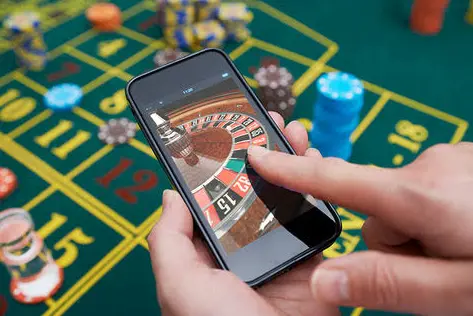
Core Architecture: Oracles, Escrow Logic, and Deterministic Execution
At an engineering level, a casino smart contract operates as a state machine deployed on an EVM-compatible chain or a high-throughput Layer 2 rollup. The contract holds player stakes in escrow, references an external oracle for verifiable randomness (VRF) or real-world sports data, and executes payout logic through deterministic functions. Critical primitives include commit-reveal schemes for anti-front-running, Merkle-proof based RNG verification, and multi-signature treasury modules that segregate operator liquidity from player funds. This separation of concerns is precisely what elevates the automated payout mechanism from a marketing claim to an auditable cryptographic guarantee. For operators, gas optimization and batch settlement routines determine whether micro-stakes wagering remains economically viable at scale.
Provable Fairness and the Elimination of Custodial Risk
Traditional online casino payouts suffer from a structural trust deficit: players must accept that the house will honor withdrawals, that the RNG was not manipulated, and that internal ledgers reflect true balances. Smart contract architecture dismantles each of these assumptions. Randomness is generated via decentralized oracle networks and published on-chain; payout ratios are hard-coded and publicly inspectable; and player balances reside in wallets the operator never controls. This transparency framework effectively converts what was once a counterparty promise into a cryptographic proof. For high-roller segments and institutional bettors, this is not a novelty — it is a prerequisite for allocating serious capital. 🔐

Latency, Gas Economics, and Cross-Chain Settlement Rails
Performance is where automated payout architectures live or die. On Ethereum mainnet, gas volatility can render small withdrawals uneconomical, which is why production-grade deployments increasingly favor Arbitrum, Optimism, Base, or purpose-built app-chains. These environments deliver sub-second block times and negligible transaction costs, enabling instant payout flows even for low-denomination spins. Cross-chain messaging protocols further allow a player to wager on one network and receive settlement on another, collapsing the friction that historically plagued international withdrawals. Operators integrating these rails must nonetheless implement circuit breakers, rate limiting, and upgradeable proxy patterns to remediate exploits without compromising the immutability guarantee that players demand.
Regulatory Posture and Institutional Adoption Trajectory
Jurisdictional clarity remains the pivotal variable. Several licensing regimes now explicitly contemplate blockchain-based settlement, provided operators maintain KYC/AML compliance at the fiat on-ramp, segregate player funds, and submit smart contract audits from recognized security firms. The audit trail inherent to on-chain execution actually simplifies regulatory reporting: every payout, every RNG seed, and every escrow movement is permanently timestamped and independently verifiable. As tier-one regulators move from prohibition to structured oversight, the casino smart contract model is positioned to become the default settlement layer for a multi-billion-dollar global wagering economy. 🚀