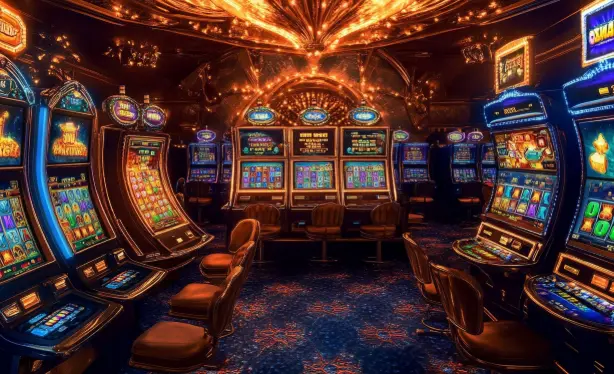
Are Robot Dealers Used in Live Casinos? The Automated Revolution at the Tables
The rapid integration of automation into the iGaming sector has sparked a fierce debate among industry veterans and high-stakes players alike. When we ask Are Robot Dealers Used in Live Casinos, the answer is not a simple binary. The short answer is a resounding yes, but the nuance lies in the technology deployed. We are not discussing the clunky mechanical arms of the past. We are witnessing the rise of sophisticated robotic arms and AI-driven virtual croupiers that mimic human dexterity with chilling precision. These systems are designed to eliminate dealer error, reduce operating costs, and provide a 24/7 gaming floor experience without the logistical nightmare of shift rotations. However, the purists argue that the "human element" is the very soul of the live dealer experience. 🎰
The Technical Anatomy of a Robotic Croupier
To understand the prevalence of these systems, one must examine the engineering marvels behind them. Modern robotic dealers are typically articulated arms equipped with high-precision grippers, often integrated into a hybrid table setup. These machines are synchronized with RFID-enabled playing cards and smart tables. When a card is dealt, the system instantly reads the value, calculates the hand total, and communicates with the central gaming server. This level of integration ensures absolute game integrity, as the possibility of card counting or manual shuffling manipulation is virtually eradicated. The latency involved in these robotic movements has been reduced to milliseconds, providing a seamless experience that rivals terrestrial casinos in Macau or Las Vegas. The primary driver for operators is the staggering reduction in overhead costs, as these machines do not require breaks, salaries, or health insurance. 🤖

Furthermore, the data generated by these robotic interactions is invaluable. Operators can track precise dealing speeds, player reaction times, and betting patterns with a granularity that is impossible with human dealers. This data feeds into sophisticated algorithms that can adjust table limits dynamically or detect collusion rings with terrifying accuracy. For the player, the experience is often faster and more consistent, devoid of the subtle psychological tells or fatigue that can affect human performance during a grueling eight-hour shift.
Player Psychology and the Authenticity Paradox
Despite the technical superiority, the adoption rate of fully automated tables remains a contentious issue. The core of the live casino appeal is the social interaction—the banter, the sympathy, and the shared adrenaline rush. A robotic arm, no matter how sleek, cannot replicate the empathetic nod of a human dealer when you bust on a 20. This psychological barrier is significant. High rollers, in particular, often reject automated tables, perceiving them as rigged or soulless. They crave the authenticity of a real person, the physical shuffle of the cards, and the potential for human error which, paradoxically, makes the game feel more "real" and less like a slot machine. Therefore, while robot dealers are used, they are often relegated to lower-stakes tables or specific game variants like automated roulette or baccarat, rather than the flagship blackjack tables.
Hybrid Models: The Best of Both Worlds?
To bridge this gap, many studios have adopted a hybrid model. In this scenario, a human dealer is physically present but is assisted by robotic elements or automated shuffling machines. This approach combines the trust and social proof of a human presence with the efficiency and security of automation. For instance, a dealer might manage the game flow and interact with players via video stream, while an automated shoe handles the actual card dispensing. This reduces the physical strain on the dealer and minimizes the risk of shuffle tracking. This model is currently the sweet spot for most operators, balancing the demand for human connection with the undeniable ROI of automation. The question shifts from "if" to "how much" automation is acceptable without alienating the player base.
Moreover, the emergence of AI-driven virtual dealers—digital avatars powered by motion capture and machine learning—is pushing the boundaries further. These are not physical robots but digital entities that can interact, deal, and even engage in small talk. While not "robots" in the mechanical sense, they function as such, providing a scalable, cost-effective solution that can be deployed across hundreds of tables simultaneously. The fidelity of these avatars is increasing exponentially, making it harder for casual players to distinguish them from a live video feed of a human dealer. The industry is rapidly approaching a point where the distinction between "live" and "automated" will be purely philosophical.
Regulatory Landscape and Fairness Implications
From a regulatory standpoint, the use of robotic dealers is subject to rigorous scrutiny. Jurisdictions like the UK Gambling Commission and the Malta Gaming Authority require that all gaming outcomes be random and that the technology be certified by independent testing labs. The absence of a human shuffler actually simplifies the auditing process, as the random number generators (RNGs) and physical card readers can be tested to a mathematical certainty. However, regulators are also cautious about the potential for "bot" players and the impact on problem gambling. The 24/7 availability of automated tables removes the natural cooling-off periods that occur when human dealers go on break, potentially exacerbating addictive behaviors. ⚖️
The Future Trajectory of Automated Gaming
Looking ahead, the integration of robotics in live casinos is inevitable and will only deepen. We are likely to see fully autonomous, multi-game robotic pits in the next decade, capable of switching between poker, blackjack, and roulette without human intervention. The technology will become a standard fixture in land-based casinos as well, used for late-night shifts when human staff are scarce. The key for operators will be transparency. Players must feel confident that the robotic dealer is fair and that the house edge is mathematically sound. As long as the industry maintains that trust, the robotic dealer will evolve from a novelty into a cornerstone of the modern gambling floor, offering a hyper-efficient, data-rich environment that appeals to a new generation of tech-savvy bettors. The silent, precise hum of the robotic arm is the sound of the future, and it is already dealing the cards.